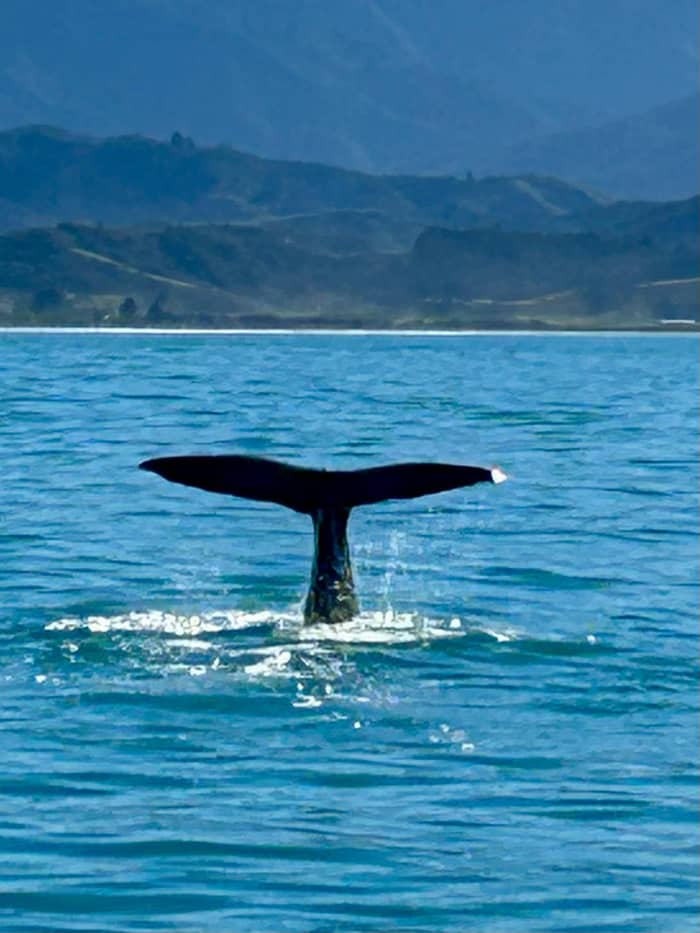
Seals and views
Clifftop walk
Free, on your own
- TimeAbout 3 hours
- WhalesWinter humpbacks
- CostFree
Guides
Language
Currency
Check open spotsfrom $103 · no fee to cancelSpot your stop
Discover 11 stops
First pick a route, then tap any pin or stop for details and Google Maps.
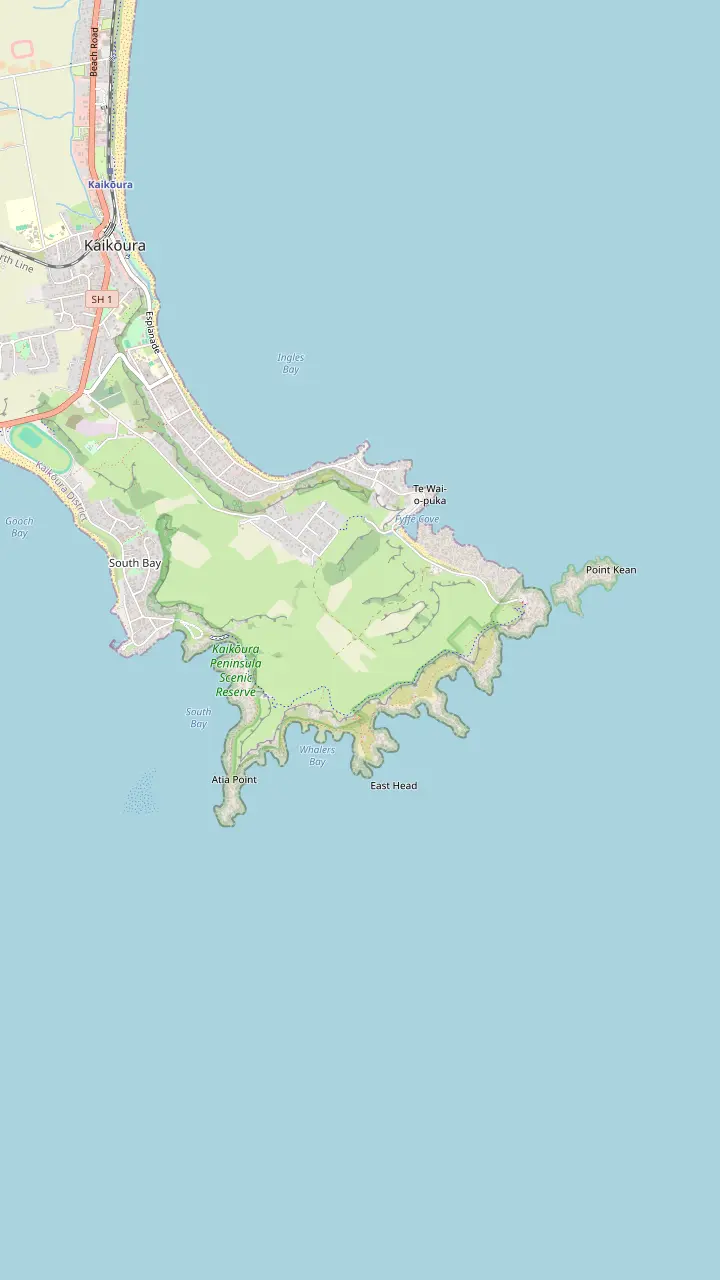
Fur seals rest around the car park and on the rock platforms; keep at least 20 m away, and explore the tidal platforms at low tide.
Google MapsThe walkway ends here at a shelter with toilets, and an accessible path leads on to Limestone Bay.
Google MapsA beach on the way to Point Kean with the walkway's first toilets.
Google MapsA hilltop viewpoint over the town, the bays and the mountains, at its best as the last light catches the peaks.
Google MapsA stairway follows the old whalers' route down the cliff to the bay where their boats were launched; come back up the same way.
Google Maps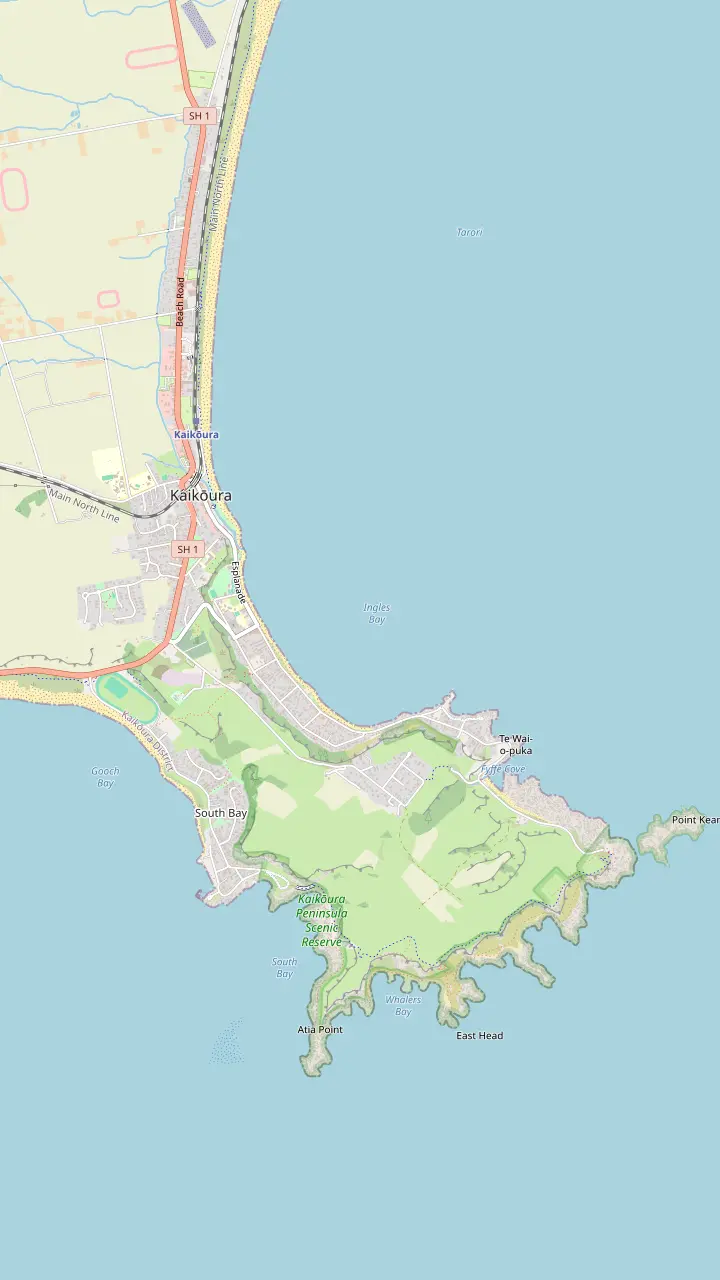
Built by George Fyffe in 1860 on piles of whale vertebrae, the last building left from the Waiopuka whaling station.
Google MapsThe town museum in the craypot building tells Kaikoura's natural, social and cultural story, a good stop on a wet day.
Google Maps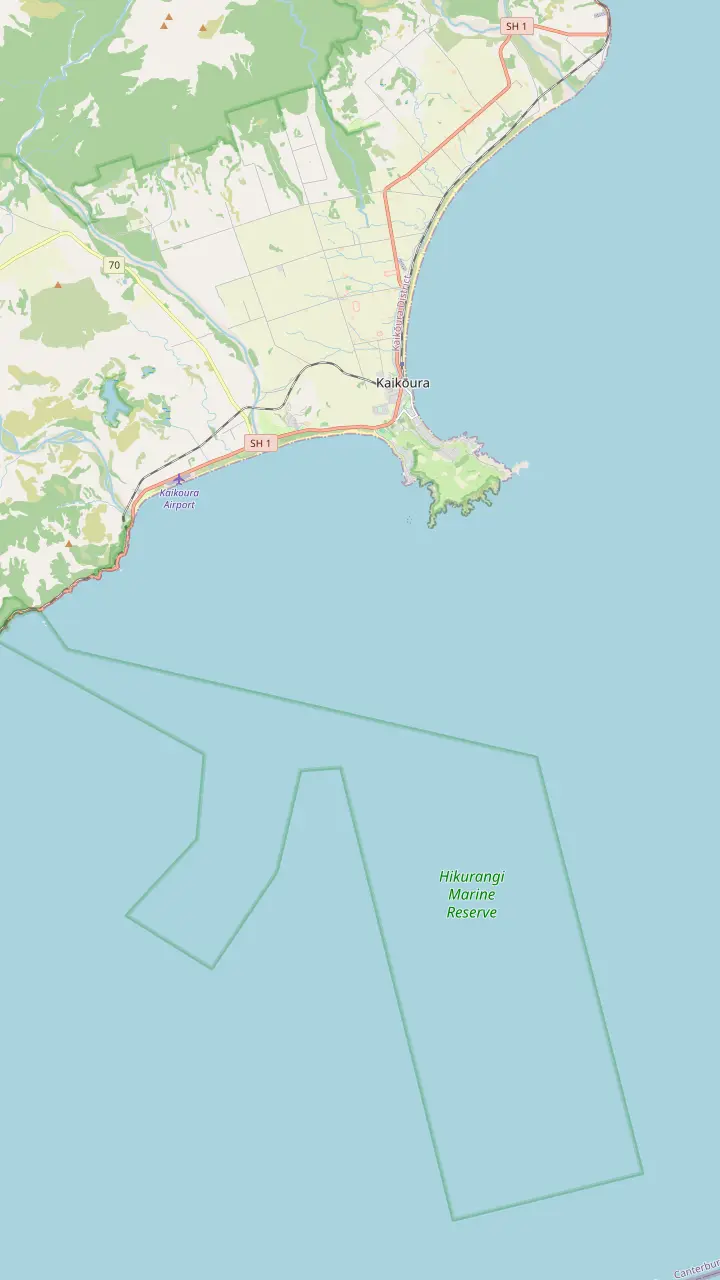
The operator's office and check-in point; arrive 30 minutes before your sailing, and a bus takes you on to the marina.
Google MapsEvery whale watching boat leaves from this marina on the far side of the peninsula, a drive of 6-7 min from check-in.
Google MapsNew Zealand's largest and deepest mainland marine reserve covers part of the canyon, about 10,395 hectares and 1,000 meters deep.
Google Maps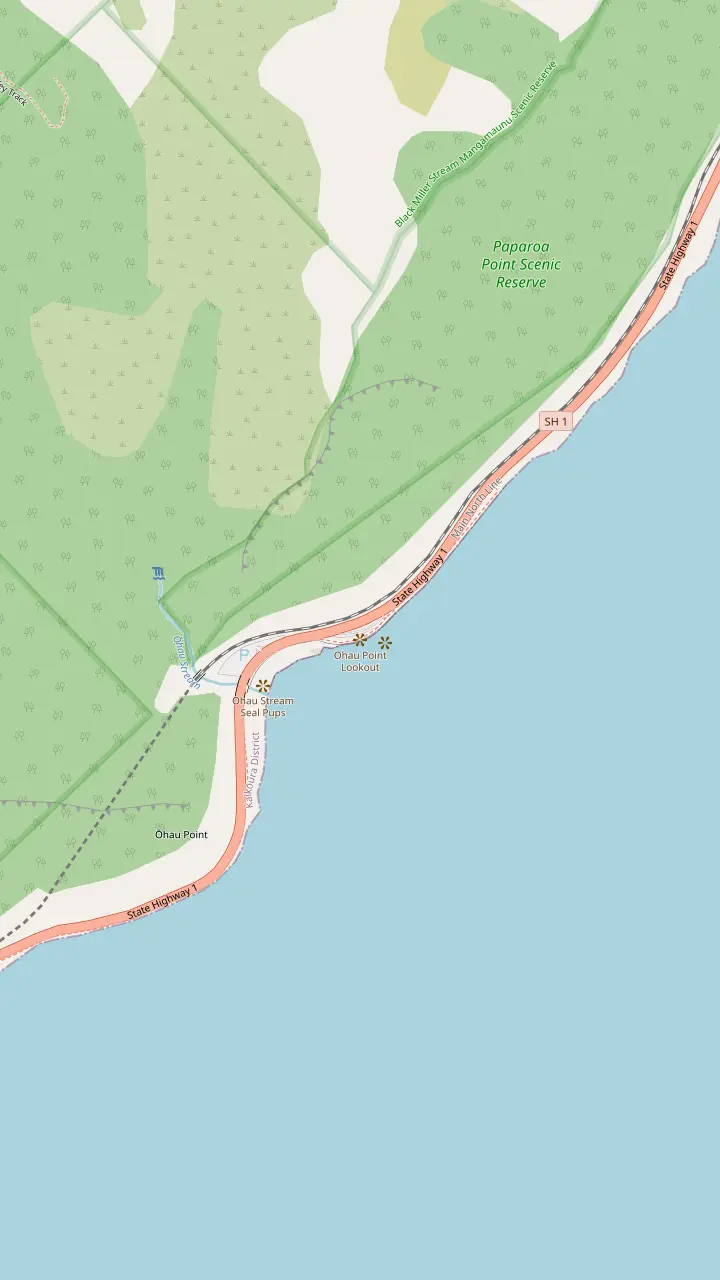
A major fur seal breeding colony; view it from the platform and roadside walkway, as the sanctuary itself is closed to the public.
Google Maps© OpenStreetMap contributors, map data
Kaikoura whale watching from shore can bring humpbacks in winter and fur seals any day, but rarely a sperm whale. Here are the lookouts, the seal colonies, the kayak option and the distance rules.
Editorial team, kaikourawhalewatching.quest · Updated November 8, 2026 · Read in 8 min
Kaikoura whale watching from shore is real, but it is a different game from a boat trip. Can you see whales from the shore in Kaikoura? Sometimes, and mostly in winter. The operator notes that humpbacks like to swim very close to shore, and its crews meet them most in the June to August stretch.1,2 DOC lists whales, dolphins, seals, birds and crayfish among the wildlife around the Kaikoura Peninsula Walkway.8 The resident sperm whales are another matter.
Sperm whales feed over the deep canyon offshore. Kaikoura Kayaks, which holds a permit to view whales by kayak, says they are too far offshore to be seen from its paddling area.9 From a clifftop you might catch a distant blow on a calm day, but you should not plan a trip around it. Southern right whales are the exception in principle: DOC says no other large baleen whale can be watched from a beach, though they rarely visit the mainland.10,11
What land does deliver is seals, seabirds and, with luck, dolphins and passing humpbacks. Kaikoura Kayaks names June to October as the main months for humpbacks along this coast.12 For a sperm whale, book the boat or a flight; for everything else, the peninsula, the coast road and a kayak can fill a day. The rest of this guide walks you through the main places on land, the kayak option and the distance rules that protect you and the animals alike.
Where to go
| Place | What you may see | Tip |
|---|---|---|
| Point Kean | Fur seals · tidal platforms | Low tide |
| Clifftop walkway | Gull colony · coast views | Allow 3 hours |
| Whalers Bay | Whaling-era stairs | Same way back |
| Ohau Point | Breeding colony · pups | Viewing platform |
| Kaikoura Lookout | Wide sea view | Evening light |
Places and tips from DOC and Destination Kaikoura.3,31,5,20,15,4,32,33
The Kaikoura Peninsula Walkway is the classic shore walk. DOC says the whole walkway takes 3 hours and suits families, and you can also walk shorter sections.5 It starts in town: walk the footpath out along The Esplanade, then Avoca Street and Fyffe Quay, as far as Point Kean.13 DOC notes that there is no scheduled public transport from town to the walkway.18 It is a recognised Tohu Whenua heritage site, with panels on the history, geology and wildlife along the way.19
From Point Kean the track climbs onto the clifftop. A lookout platform shaped like a waka looks over both the sea and the mountains.14 Further on, a stairway follows an old whalers' route down the cliff to Whalers Bay, and DOC asks walkers to come back up the same way.15 Below the clifftop sits Bird City, which DOC says is the South Island's biggest colony of red-billed gulls.20 Do not climb the Sugarloaf landmark nearby, to prevent more erosion.21
The track ends at South Bay, where a fully accessible path leads from the car park to Limestone Bay.22 From the South Bay shelter you return to town along the coast and over the hill via Toms Track.17 There are no toilets on the clifftop, only at Armers Beach and South Bay.16 Mountain biking is not allowed.23 The cliff edges are exposed and unfenced, so stay on the formed track and keep children close.24 High tide can also block the shoreline.25
For a first seal, Point Kean is the obvious place. Destination Kaikoura calls the rocky area a popular daytime hangout for fur seals, with a track from the car park up to a lookout.3 DOC explains who is where: most of the seals in the car park are males, while those on the rocky platforms out from it are females and their pups.36,37 The males may look sleepy, but DOC warns they can turn aggressive if disturbed.36 For your safety and theirs, stay at least 20 m from any seal.6
Watching seals in Kaikoura is easy, which is exactly why rules matter. In January 2026 DOC reported visitors getting far too close, and even a report of people kicking or poking seals for a photo, which it was investigating.38 It warned that at this time of year mothers can abandon pups if disturbed.39 Destination Kaikoura adds that if a seal lifts its head, calls out or moves towards you, you are too close.40 Stay behind any ropes: they are there for the seals' protection.41
Low tide opens more of the shore. DOC says you can explore the tidal platforms from the car park when the tide is out; shags are a common sight, and little blue penguins sometimes float just beyond the rocks.31 Look for seals sliding in and out of the kelp at the edge of the rock. DOC also notes that fur seals feed almost entirely at night, and many lie still on the rocks by day.42 A long lens beats a short walk closer every time.
Plan your shore day
Match the time you have to the place that fits it.
If I have an hour
Point Kean seals
Seals rest here by day, and a track climbs to a lookout.3
If I have a morning
The full walkway
DOC says the whole walkway loop takes 3 hours.5
If I want seal pups
Ohau Point lookout
If I want whales without a boat
Come in June
Join the whale count at the peninsula station.35
If I want to get on the water
A guided kayak
Kaikoura Kayaks guarantees fur seal sightings.7
Three ways to look
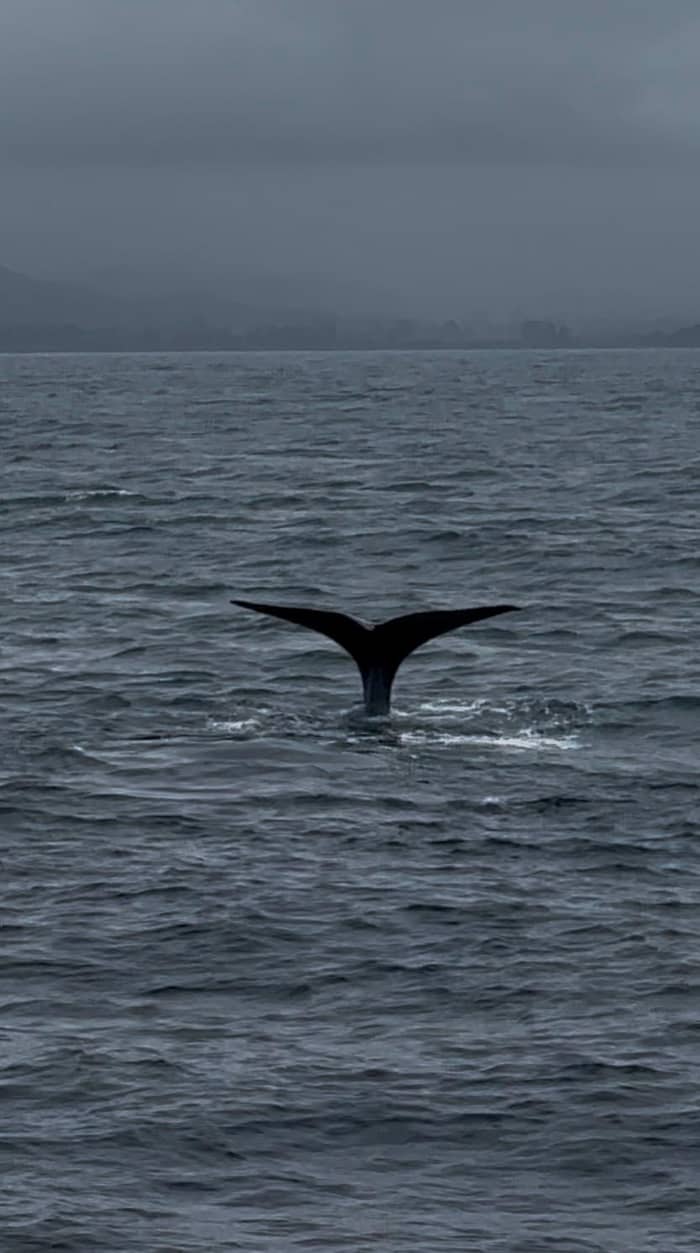
Seals and views
Free, on your own
Seals guaranteed
Guided, low to the water
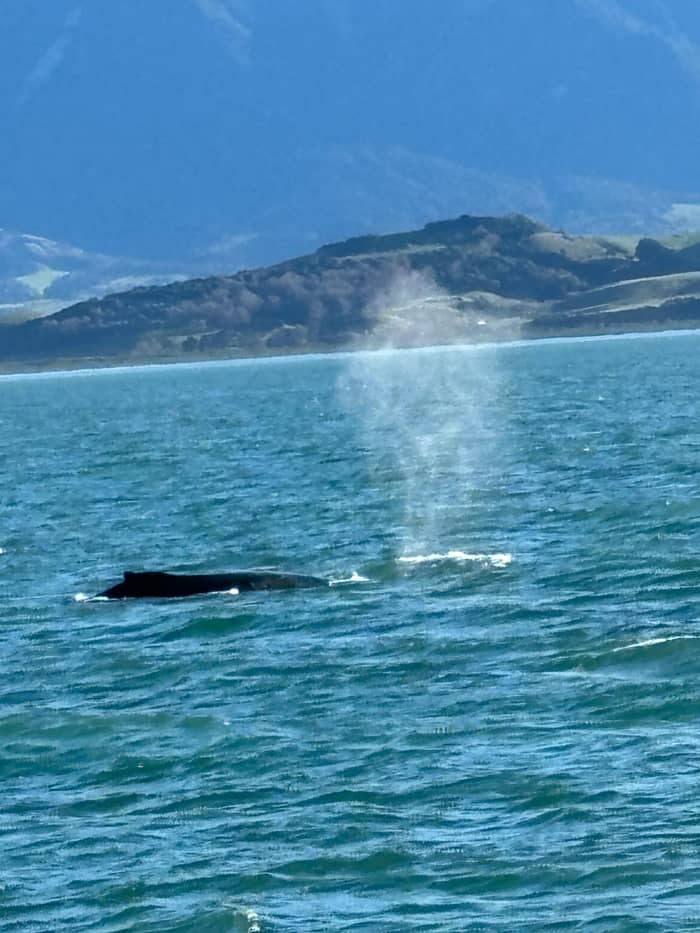
Sperm whales
Offshore over the canyon
North of town, Ohau Point is one of the region's main breeding colonies. DOC describes it as a significant breeding colony for kekeno, with 800 m of shoreline set aside as a fur seal sanctuary.4,55 Public access to the sanctuary itself is prohibited, so the seals can rest and the pups can feed undisturbed.56 You watch instead from the viewing platform at Ohau Point and from the roadside walkway that runs along the sanctuary.32
It is an easy outing from town. Destination Kaikoura puts the colony a 20 minutes' drive away.34 It recommends a stop at the lookout there, where seal pups play in the rock pools below.57 The operator also notes that kekeno can be seen from various points along the road that hugs the coast.58 Pull in only at marked stopping places, and keep well back from the road edge, where trucks and campervans pass close.
Check the road before you drive north. Tourism New Zealand says the district is still in recovery after floods in July 2026, and it asks travellers to stay alert for landslides and to read Kaikoura District Council notices first.59 The colony is busiest, and most easily upset, during the breeding weeks from mid-November to mid-January.60 Kaikoura Kayaks also spots pups along the coastline each spring.61
Get closer
Set your group size to compare a paddle with a boat trip.
Compare 3 alternatives
Set your group size to compare a paddle with a boat trip.
≈
View≈
View≈
ViewConverted at the ECB reference rate, from-prices as listed by GetYourGuide. The precise amount is shown when you book.
On foot
Start
Along The Esplanade to Point Kean.13
Point Kean
Stay at least 20 m from seals.6
Clifftop
A waka-shaped platform looks over sea and mountains.14
Whalers Bay
Stairs go down, and you return by the same track.15
South Bay
Toilets here and at Armers Beach.16
Finish
Back over the hill via Toms Track to the Esplanade.17
For a wide view of the sea, head uphill. Destination Kaikoura suggests Kaikoura Lookout, South Bay or a quiet spot on the coast as the evening light catches the mountains.33 Bring binoculars and scan slowly: a whale's blow is a short puff of mist, easy to miss with the naked eye. On a calm winter morning, humpbacks travelling north along the east coast can pass within sight of land.62,1 Look for splashes too, as a breaching whale throws up white water you can see from far away.
In June you can join the experts. The Great Kaikoura Whale Count is open to anyone, and the institute behind it asks each volunteer for a two-hour shift at the monitoring station on the peninsula.63,64 Shifts run every day of the month between 10:00am and 4:00pm, and no experience is needed.35 On the busiest day of the 2024 count, 30 June, spotters logged 22 sightings of whales and dolphins, 11 of them humpbacks.65,66
Seabirds give land watchers plenty to do between whales. In summer, DOC says, large rafts of Hutton's shearwaters sit on the water off the peninsula before flying up to their mountain colonies.67 They are around from August to March, their nesting season.68 DOC asks walkers to keep their distance from wildlife; a bird swooping at you is telling you to back away.69 Keep to the tracks above the gull colonies, which are especially sensitive in the summer breeding months.
Video
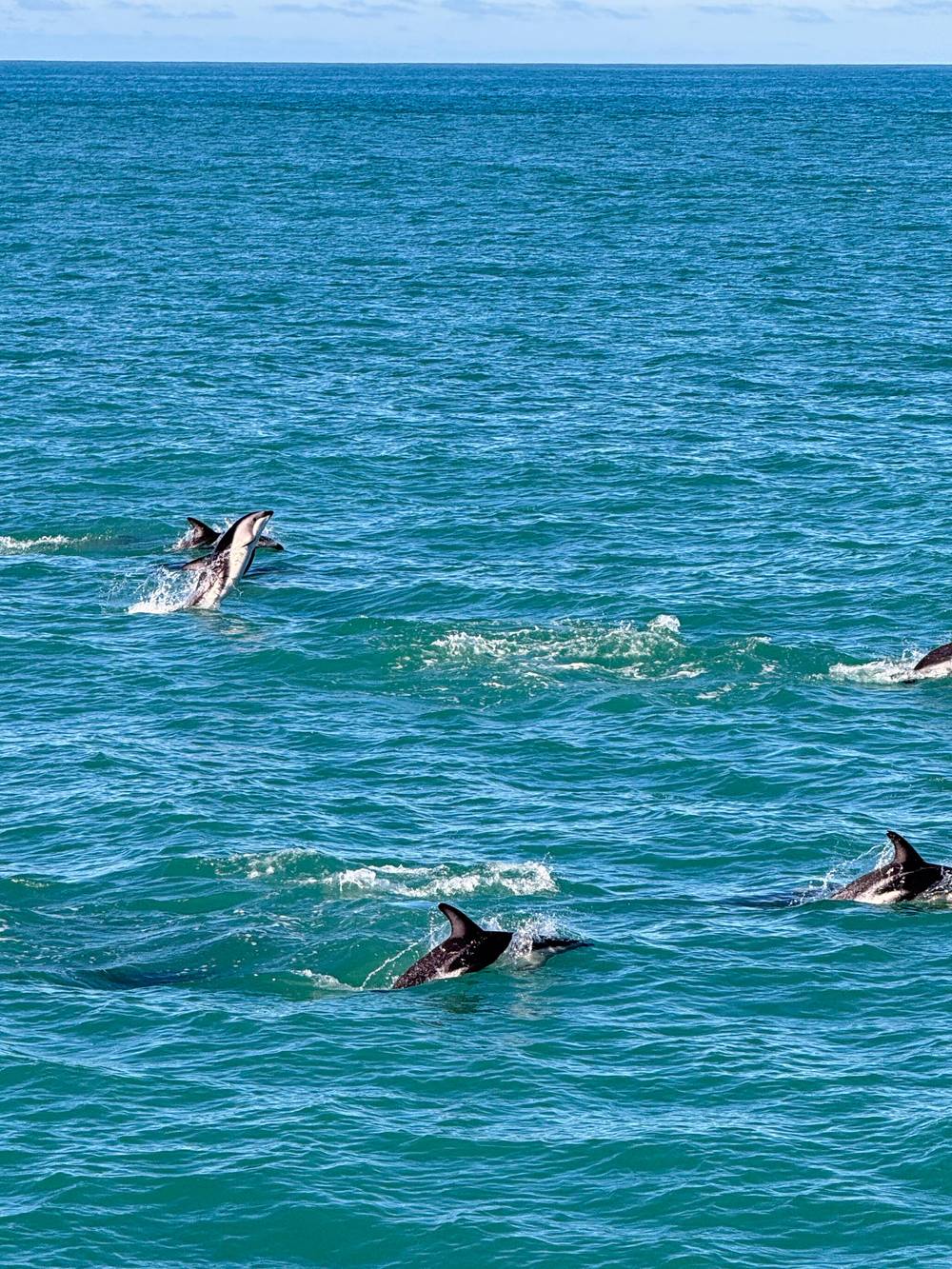
The NZ Brits on YouTube · Tap play to load the video; not before.
Tohorā are a native migrant to New Zealand and are the only large baleen whales that can be seen from the beach
Shore rules
A sea kayak bridges the gap between the shore and the boat. Kaikoura Kayaks says no other company in New Zealand holds a permit to take guided kayak groups to view whales, dolphins and seals.70 It guarantees that you will see New Zealand fur seals on its guided tours.7 Whale species seen from its kayaks include orca, humpback, minke and blue whales, and winter and spring are its best months for humpbacks.71,72 It does not promise any whale, and sperm whales stay out of its range.9
Expect a real paddle. The company says its wildlife tours last 3 - 3.5 hours from sign-up to finish, with 1.5 to 2 hours spent on the water.73 It takes non-swimmers in stable double kayaks, paired with an experienced paddler or guide.74 Bring a water bottle, a thermal top and shorts or quick-dry trousers, and definitely no jeans.75 Families with children aged 12 and under book its family tour, which uses a smaller group per guide.76
Kayaks with paddles are not the only option. A pedal-powered kayak tour focused on seals is on offer from another local company, and a seal swimming operator runs summer trips from 1 November.77 Destination Kaikoura describes the sea on morning paddles as usually calm.78 Whichever you choose, the same distance rules apply on the water as on land, and the guide will keep you at a respectful distance from the colony.
DOC's rules for the coast are short and clear. Give seals space and stay at least 20 m away if you can.26 Do not drive a vehicle closer than 50 m to a marine mammal.27 Never try to touch a seal: they can be aggressive and often carry diseases.51 Do not feed any wildlife, as animals can come to rely on people for food.52 Never try to move or handle a seal yourself, even a pup that seems alone.79
Drones follow the same rules as aircraft near marine mammals.80 That means keeping a horizontal distance of more than 150 m from any whale, dolphin or seal.28 Dogs need extra care: Destination Kaikoura asks owners to keep them on a leash in coastal areas and never let them near seals or birds.81 DOC allows dogs on only a few sections of the peninsula, and never on the tidal platforms.23 Leave the dog at your accommodation for the walkway.
These rules carry weight in law. All seals, dolphins and whales are protected, and DOC says anyone convicted of harassing or harming one faces up to 2 years in prison or a fine of up to NZD 250,000.82 If you see an animal injured, entangled or being harassed, ring DOC's emergency line on 0800 362 468.54 DOC adds that photos or video you can take safely help its rangers.83 A respectful visit costs you nothing and keeps the colonies thriving.
FAQ
They feed offshore over the canyon, beyond even the kayak area.9
DOC says you can also walk shorter sections of the track.5
DOC asks walkers to stay at least 20 m from any seal, pups included.6
Call DOC's hotline on 0800 362 468 and say where the seal is.54
Kaikoura Kayaks guarantees fur seal sightings on its guided tours.7
Sources
More to read
Wondering if the whales will show? A real person answers here.