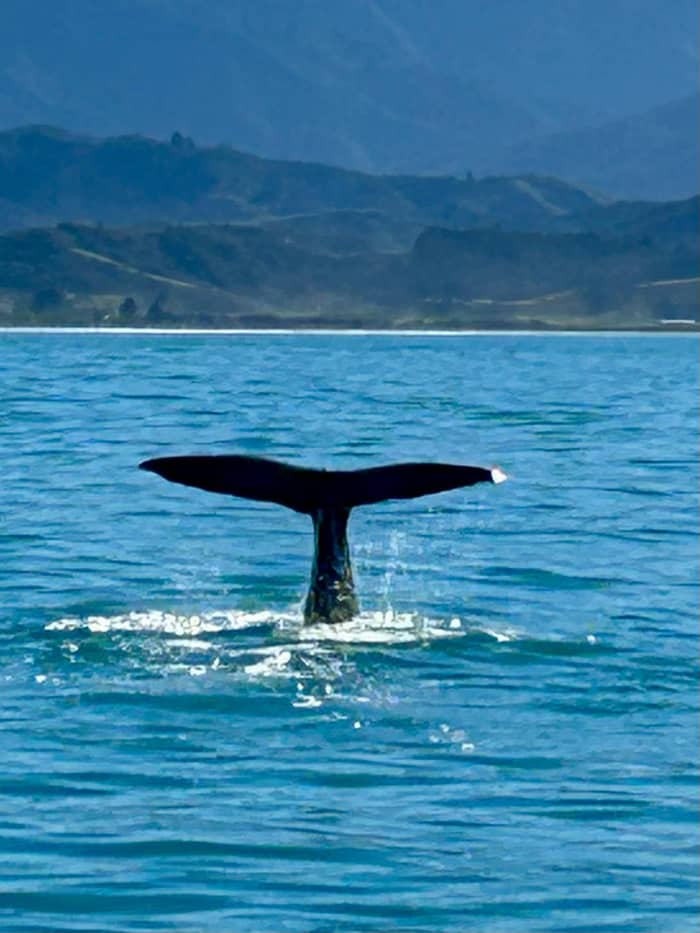
Whale bone piles
Fyffe House
Whaler's cottage, 1860
- WhatLast whaling building
- TouchWhale bones, baleen
- NearPoint Kean
Guides
Language
Currency
Check open spotsfrom $103 · no fee to cancelSpot your stop
Kaikoura whale watching cruise
★ 4.6 · From 3,699 reviews
Discover 11 stops
First pick a route, then tap any pin or stop for details and Google Maps.
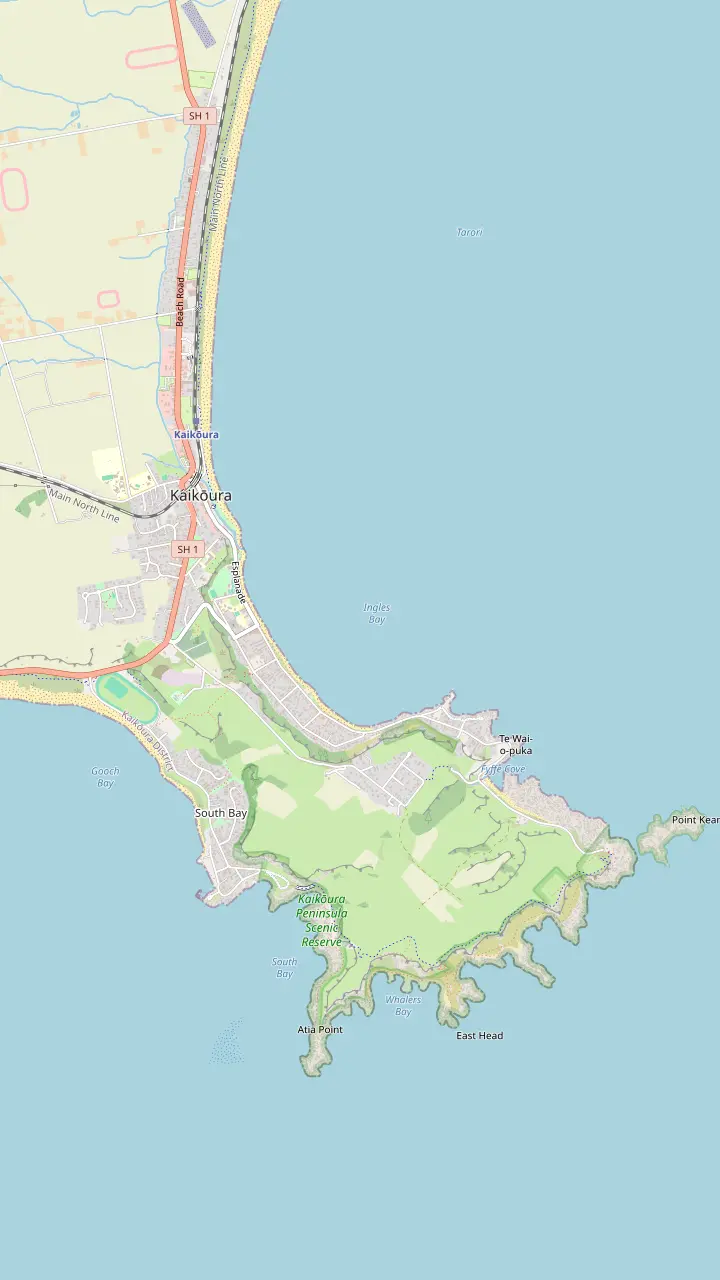
Built by George Fyffe in 1860 on piles of whale vertebrae, the last building left from the Waiopuka whaling station.
Google MapsThe town museum in the craypot building tells Kaikoura's natural, social and cultural story, a good stop on a wet day.
Google Maps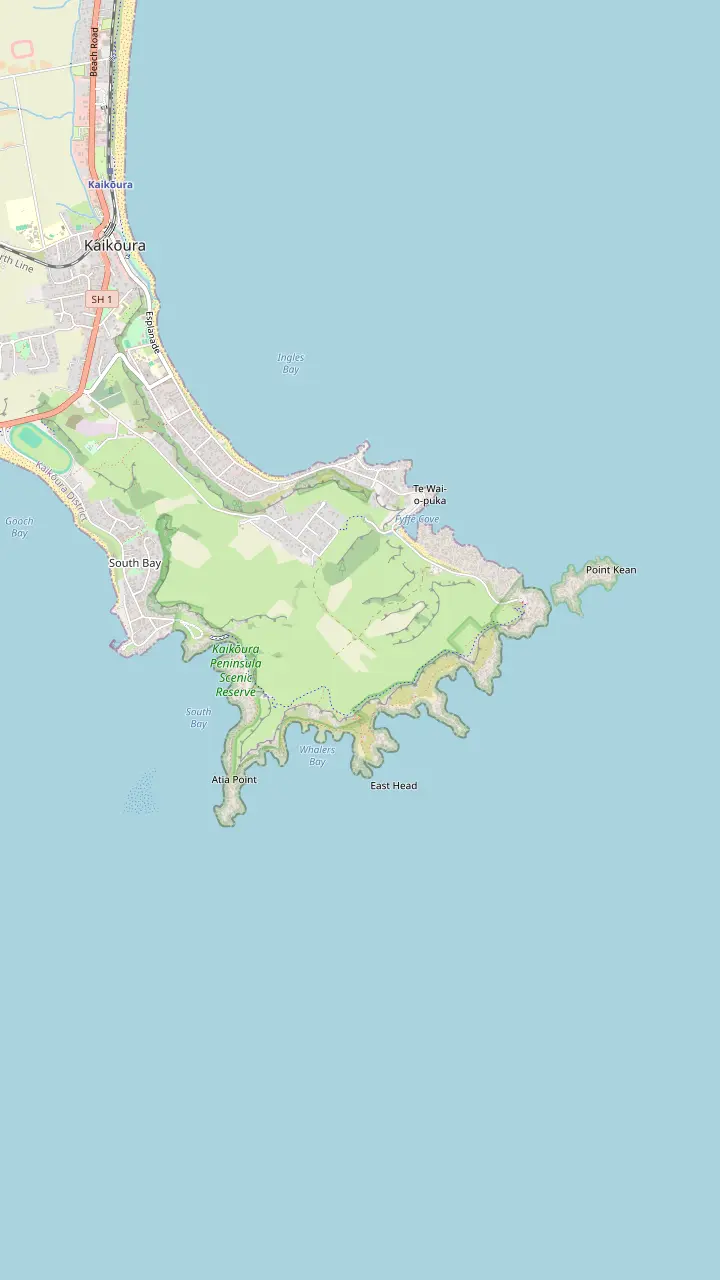
Fur seals rest around the car park and on the rock platforms; keep at least 20 m away, and explore the tidal platforms at low tide.
Google MapsThe walkway ends here at a shelter with toilets, and an accessible path leads on to Limestone Bay.
Google MapsA beach on the way to Point Kean with the walkway's first toilets.
Google MapsA hilltop viewpoint over the town, the bays and the mountains, at its best as the last light catches the peaks.
Google MapsA stairway follows the old whalers' route down the cliff to the bay where their boats were launched; come back up the same way.
Google Maps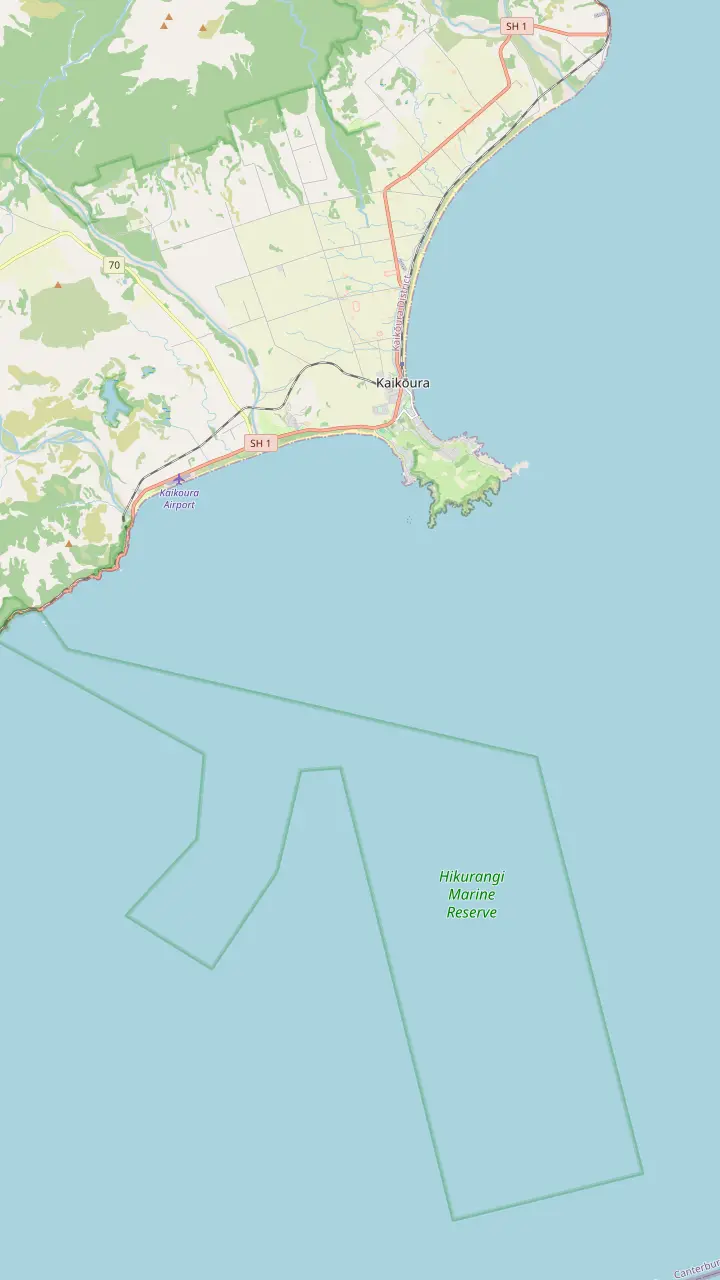
The operator's office and check-in point; arrive 30 minutes before your sailing, and a bus takes you on to the marina.
Google MapsEvery whale watching boat leaves from this marina on the far side of the peninsula, a drive of 6-7 min from check-in.
Google MapsNew Zealand's largest and deepest mainland marine reserve covers part of the canyon, about 10,395 hectares and 1,000 meters deep.
Google Maps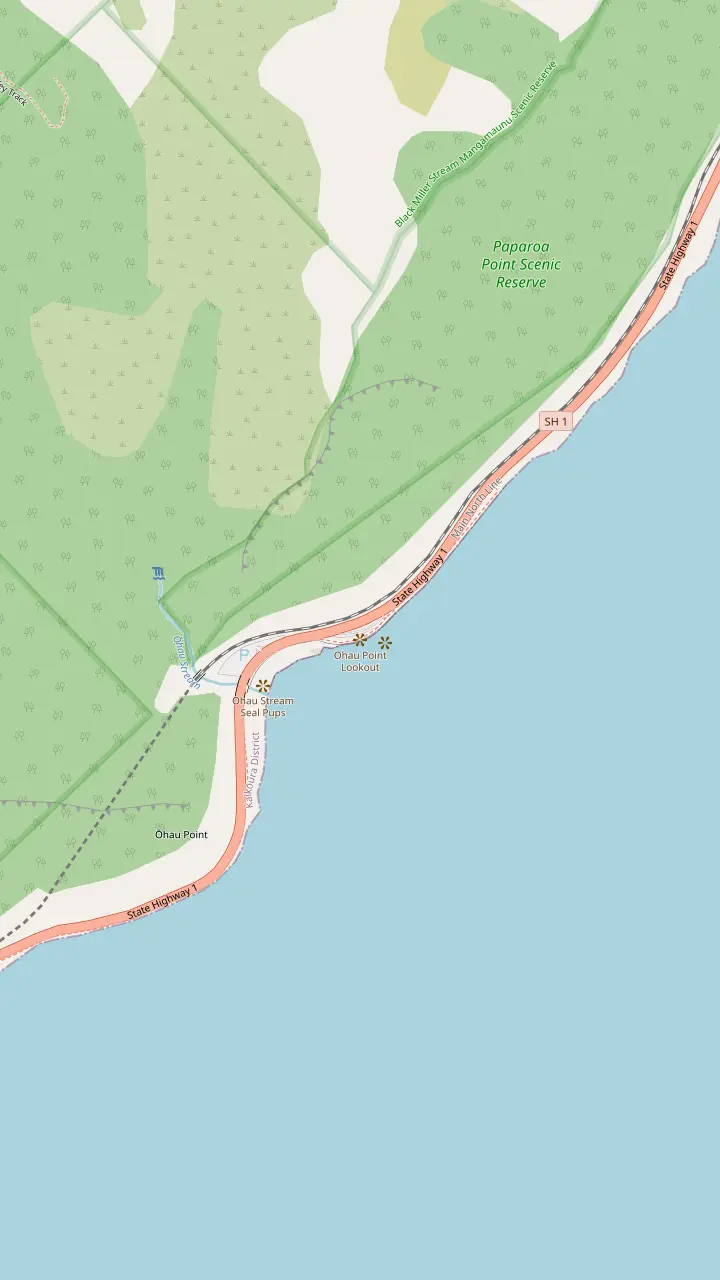
A major fur seal breeding colony; view it from the platform and roadside walkway, as the sanctuary itself is closed to the public.
Google Maps© OpenStreetMap contributors, map data
The history of whale watching in Kaikoura is a story of a town that hunted whales, lost them, and then built a new life by watching them. It runs from Māori tradition through Fyffe House to a boat trip begun in 1987.
Editorial team, kaikourawhalewatching.quest · Updated November 8, 2026 · Read in 8 min
The history of whale watching in Kaikoura begins long before boats and binoculars. DOC describes the peninsula as rich in over 800 years of Māori tradition, from the earliest moa hunters onwards.1 The town's name means eat crayfish, recalling the day the ancestor Tama ki te Raki stopped here for a meal of crayfish on his journey around the South Island.6 An older name, recorded by the iwi-owned whale watching company, is Te Koha O Marokura, the gift of Marokura.7
The peninsula itself carries a story. Tradition holds that Māui braced his foot here as he hauled up the North Island, and the peninsula's oldest name, Te Taumanu o te Waka a Māui, means the seat of Māui's canoe.8 DOC counts no fewer than 14 pā sites on the peninsula; most were held only briefly, and some saw fierce fighting.9 Walk the clifftop track today and the low grassy terraces you cross are part of that history.
Several peoples have called this coast home. The whale watching company's own account says Waitaha and Kāti Māmoe lived here first, and that Ngāti Kuri, a hapū of Ngāi Tahu, came around 350 years ago.10 Their marae, Takahanga, stands on the site of an ancient pā above the town, and its meeting house opened in January 1992.11 DOC notes that Ngāi Tahu occupy the area at Takahanga Marae today.12 Visitors see the marae from the road; it is not a stop on any tour.
Two eras
| Whaling era | Watching era | |
|---|---|---|
| Main whale | Southern right | Sperm whale |
| Tool | Harpoon | Camera |
| Who worked it | Mixed crews | Ngāti Kuri |
| Landmark | Fyffe House | South Bay marina |
| Ended or began | Last hunt, 1964 | Founded, 1987 |
From the operator's history and company pages and DOC.27,28,29,30,3,31,4,5
Whales sit at the heart of Ngāti Kuri identity, and the people tell the reason themselves. Their company's site tells how, many centuries ago, the ancestor Paikea travelled from the Pacific Islands to New Zealand riding a whale, and that the Ngāti Kuri of Kaikoura descend from him.18 In that telling, Tohorā the whale carried Paikea to Whangara, just north of present-day Gisborne, where he began a new life.19
The tradition reaches across the country. Ngāi Tahu share Paikea as an ancestor with Ngāti Porou of the East Coast, and the iwi name comes from one of his descendants, Tahupōtiki.20 At Takahanga the story is carved into the wharenui, Maru Kaitatea, where it marks the people's bond with this stretch of coast.21 The deeper meanings of the story belong to the people whose ancestor Paikea is, and they are theirs to tell.
That bond has legal weight too. Under the Ngāi Tahu Settlement Act, the operator notes, the sperm whale is a statutorily acknowledged taonga species, a treasure in Māori terms.22 DOC reports that kekeno, the fur seals, are likewise a taonga species, both for Ngāti Kuri and for Te Rūnanga o Ngāi Tahu.23 Keep that in mind on the boat and on the rocks: the animals you photograph are part of somebody's family story, not only a sight.
European settlement came with the whalers. DOC explains that whales gather here because of the unusually deep water close to shore, and that the whaling trade drew the first European settlers.37 New Zealand whaling peaked in 1839, when approximately 200 whaleships were working its waters.38 At Kaikoura, DOC says, Robert Fyffe set up the first shore-whaling station, Waiopuka, in 1843, and other stations soon followed in South Bay.2
The dates differ slightly between sources. The whale watching company's history page says European settlement began in 1842, when Robert Fyfe founded a whaling station, with his cousin George Fyffe joining later; the cousins spelled their names differently.39 The same page says Robert began shore-whaling in 1841 and settled ownership through a partnership in 1842.40 Either way, shore whaling here began early in that decade, and the exact year is a matter of record-keeping.
Life at the stations was hard and mixed. The Fyffe cousins hired many local Māori men alongside whalers from around the world, and many of the newcomers married local Ngāi Tahu women.29 From the clifftop above the Sugarloaf, DOC notes, whalers kept watch for their quarry, and Whalers Bay was where their boats were launched.41 The main catch was the southern right whale, already rare in the 1840s, and its numbers soon collapsed.27
Explore the story
Pick by the time you have and the weather outside.
If I have an hour in town
Fyffe House
If It is raining
Kaikoura Museum
Stories of the town's nature and people.34
If I am driving the coast
Cultural Artwork Trail
The trail has seven stops along 60km of the highway.35
If I want the Māori story
Read the iwi's own account
Ngāti Kuri tell the Paikea story themselves.18
If I am on the boat anyway
Listen to the narration
It covers the area's history as well as the wildlife.36
See the history
Whale bone piles
Whaler's cottage, 1860
Rainy day
The craypot building
On the drive
Along State Highway 1
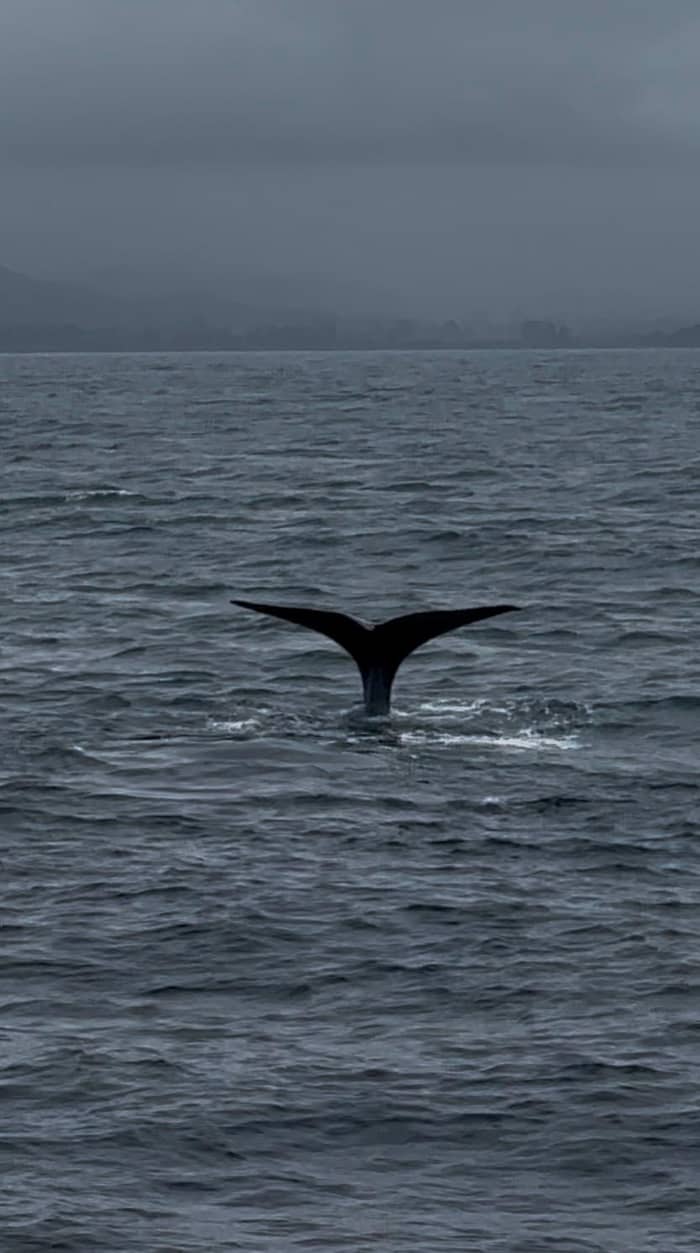
The whaling years left one building standing. Fyffe House, DOC records, was built by George Fyffe in 1860 and is open to the public.3 Destination Kaikoura calls it the last visible remnant of the Waiopuka whaling station.32 The original one-storey cottage stands on piles cut from the backbone of a southern right whale, a tohorā.53 The whale watching company describes it as the town's oldest surviving building, still painted in its original pink.54
Inside, the past is close. The operator says you can feel how cramped a whaler's cottage was, handle whale bone and baleen, and even catch the smell of whale oil.55 Fyffe House is recognised as a Tohu Whenua heritage experience, and it sits just minutes from the Point Kean seal colony.33 Near the house, DOC points out, an old brick chimney is all that remains of the customhouse from the days when the port was the town's main link to the world.13
Plan to combine the house with the walk. DOC places Fyffe House on the way to the northern end of the Peninsula Walkway.3 Start with the house, then follow the coast to Point Kean and up onto the clifftop where the whalers once kept watch. Standing on the waka lookout and scanning the sea, you are doing exactly what they did, minus the harpoon. Check the house's current opening hours before you go, and allow time to read the panels outside.
Key dates
1843
Robert Fyffe's first shore station, per DOC.2
1860
George Fyffe builds the house.3
1931
The port closes as land access improves.13
1945
Christchurch to Picton, 21 tunnels.14
1964
The last sperm whale hunted here.4
1987
Ngāti Kuri leaders form the whale watching company.5
2014
Sanctuaries and reserve opened.15
2016
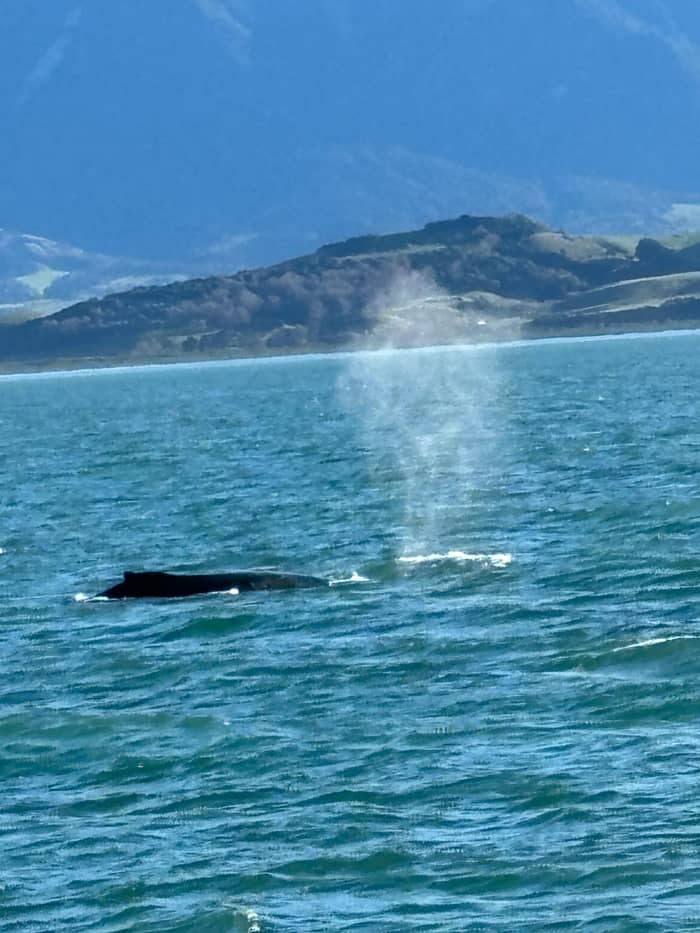
Whaling faded slowly. DOC says whale numbers fell steadily after 1850 under the pressure of the industry, until hunting them stopped paying.56 George Fyffe and many of his whalers took up sheep and dairy farming instead, and farms carried the local economy until the whale watching era opened in 1987.57 Humpback and sperm whales still kept a small whaling trade going in Kaikoura until the early 20th century.58 Sperm whales had been prized for their spermaceti oil, burned in smokeless candles in the 19th century.59
The town's links to the outside world changed too. Most people and freight once came by sea, but as land access improved the port closed in 1931.13 In 1945 the railway between Christchurch and Picton opened, with 21 tunnels along the way.14 The operator records that the last sperm whale hunted at Kaikoura was taken on December 21st 1964.4 DOC dates the end of New Zealand whaling to the same year, when the Perano station in Tory Channel closed.60
Protection followed. Every marine mammal in New Zealand's waters out to 200 nautical miles is protected by the Marine Mammals Protection Act of 1978.61 DOC sums up the change: with marine mammals fully protected, the whales again find Kaikoura a safe place, and the town is now internationally known for whale watching.62 So when did whale watching in Kaikoura start? Not until the town had come through some hard years first.
Video
SLICE Wild on YouTube · Tap play to load the video; not before.
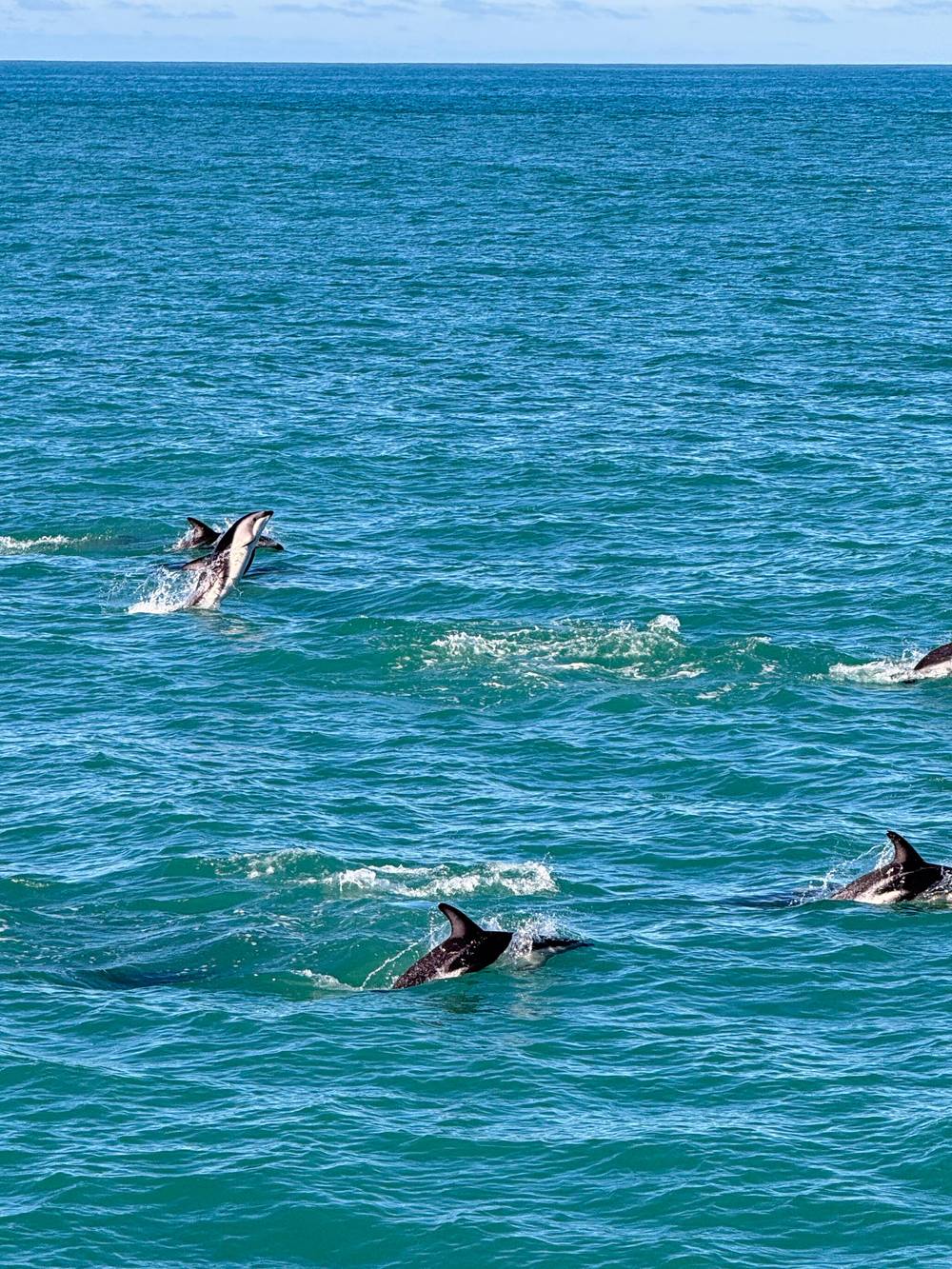
Whales are still "hunted" in New Zealand, but with cameras, not harpoons
Heritage day
The whale watching company dates its founding to 1987, a time when Māori were among the casualties of the town's declining economy.5 DOC notes that, like other small towns, Kaikoura suffered in the recession of the 1980s.63 Ngāti Kuri leaders, among them the late Bill Solomon, saw the local sperm whales as a way out of unemployment for Māori families.64 The founders mortgaged their own houses to secure a loan for the business.65
It started small. In the early days passengers went out on a 6.7 metre inflatable that carried 8 people at a time.24 The company counts 1989 as its first year of operation, when it carried 3,000 passengers.66 Today each of its catamarans takes up to 116 passengers, and up to 100,000 people a year can sail.26,67 Growing the fleet meant building a whole marina in South Bay, from where every tour now leaves.31
The link between Whale Watch Kaikōura and Ngāi Tahu runs through its ownership. The majority shareholder is the Tukete Charitable Trust, representing the founding local families, and the minority shareholder is Ngāi Tahu Capital, representing Te Rūnanga o Ngāi Tahu.68,69 The company calls itself a 100% Māori and Ngāi Tahu business.70 In its own words, Paikea's descendants are once again riding a whale towards a new life and prosperity.71
Whale watching changed the town. DOC says visitors drawn by the marine mammals have brought increased prosperity since the hard 1980s.63 The company says its success stimulated investment in accommodation, restaurants, cafes and galleries.72 DOC puts it neatly: New Zealand still hunts whales, only now with cameras, and Kaikoura's whale watching draws thousands of visitors a year.28 The Marine Management Act followed in 2014.73
That law built a web of protection. The operator records that the Kaikoura Marine Management Area was formally opened on 6 August 2014, giving New Zealand its first whale and seal sanctuaries and its deepest marine reserve.15,74 The Kaikoura Marine Area runs from Clarence Point south to the Conway River and 12 nautical miles out to sea.75 A 10-year review found the law's measures largely effective, and public consultation on it closed on 11 November 2025.76
Then the ground moved. Just after midnight on 14 November 2016, a magnitude 7.8 earthquake struck, and the community was cut off from the rest of the country.16,17 Around the peninsula the seabed and coast rose up to 2 metres.77 The whale watching fleet has since been renewed, with Te Ao Mārama joining in October 2020 and Wheketere in February 2022.78 The 60km Cultural Artwork Trail along State Highway 1, built in the rebuild, now tells the stories of the coast's peoples.35,79
FAQ
Ngāti Kuri's account says Paikea came to New Zealand on the back of a whale.18
DOC says George Fyffe built it in 1860, and it is open to visitors.3
Those whales were already rare in the 1840s and soon collapsed.27
The operator dates the last Kaikoura hunt to December 21st 1964.4
DOC links the name to the ancestor Tama ki te Raki's meal of crayfish.6
Sources
More to read
Wondering if the whales will show? A real person answers here.