No fishing
Marine reserve
Part of the canyon
- AreaAbout 10,395 ha
- Depth1,000 m
- RuleTake nothing
Guides
Language
Currency
Check open spotsfrom $103 · no fee to cancelSpot your stop
Discover 11 stops
First pick a route, then tap any pin or stop for details and Google Maps.
The operator's office and check-in point; arrive 30 minutes before your sailing, and a bus takes you on to the marina.
Google MapsEvery whale watching boat leaves from this marina on the far side of the peninsula, a drive of 6-7 min from check-in.
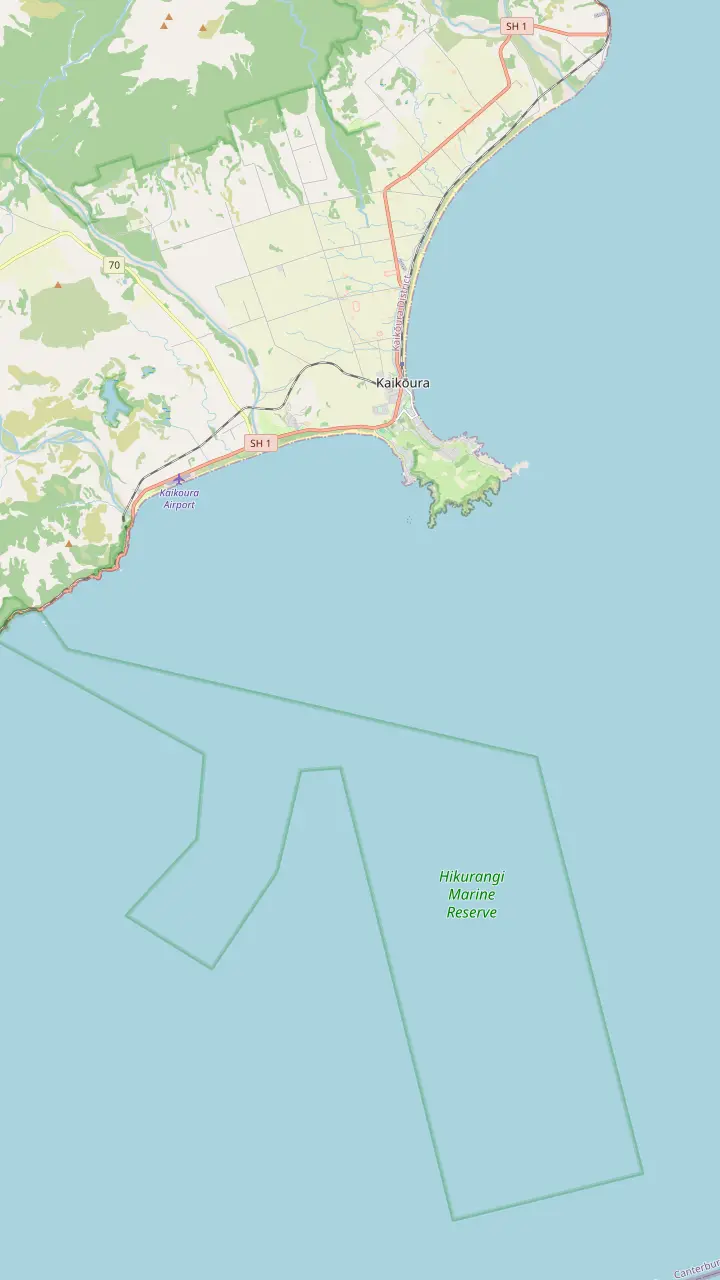
Google MapsNew Zealand's largest and deepest mainland marine reserve covers part of the canyon, about 10,395 hectares and 1,000 meters deep.
Google Maps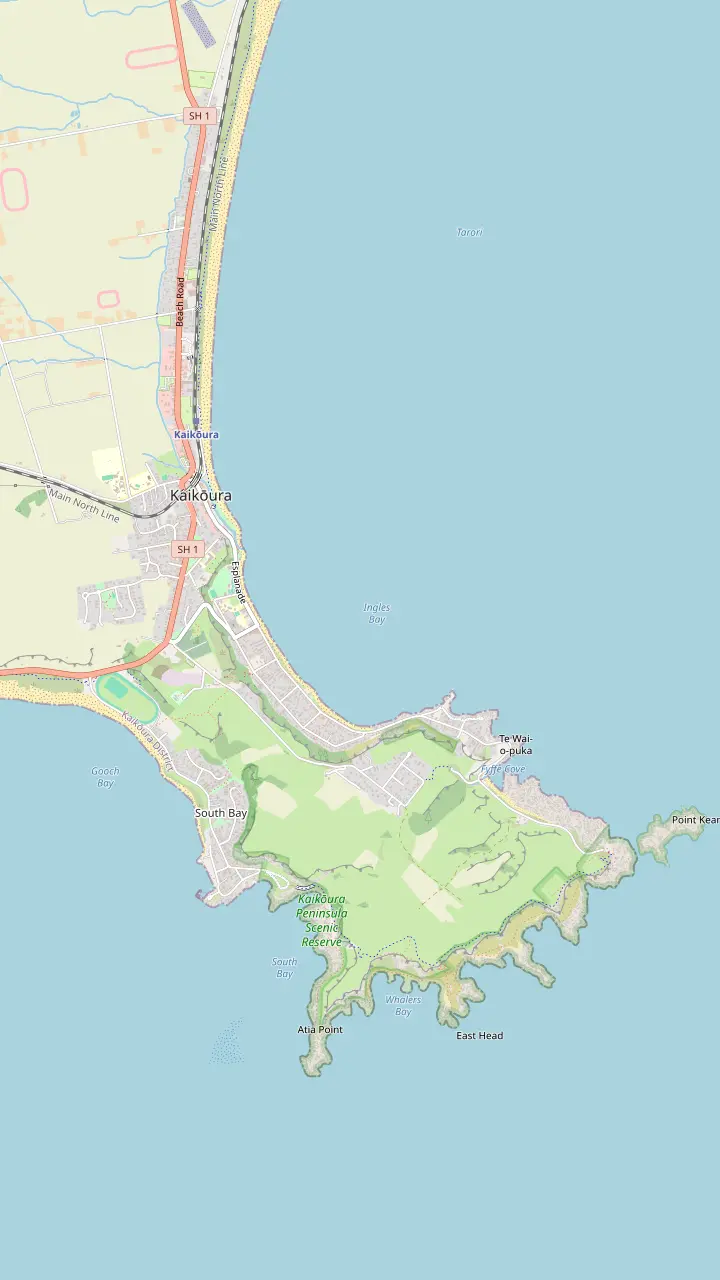
Built by George Fyffe in 1860 on piles of whale vertebrae, the last building left from the Waiopuka whaling station.
Google MapsThe town museum in the craypot building tells Kaikoura's natural, social and cultural story, a good stop on a wet day.
Google Maps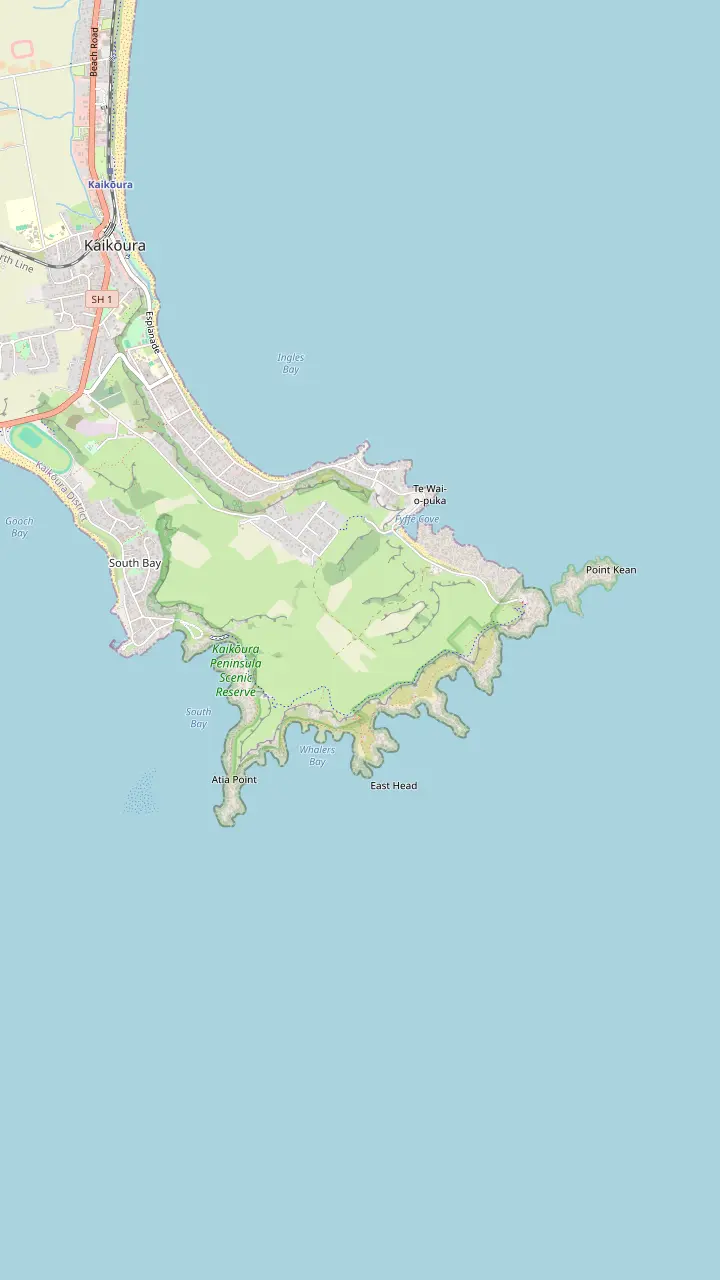
Fur seals rest around the car park and on the rock platforms; keep at least 20 m away, and explore the tidal platforms at low tide.
Google MapsThe walkway ends here at a shelter with toilets, and an accessible path leads on to Limestone Bay.
Google MapsA beach on the way to Point Kean with the walkway's first toilets.
Google MapsA hilltop viewpoint over the town, the bays and the mountains, at its best as the last light catches the peaks.
Google MapsA stairway follows the old whalers' route down the cliff to the bay where their boats were launched; come back up the same way.
Google Maps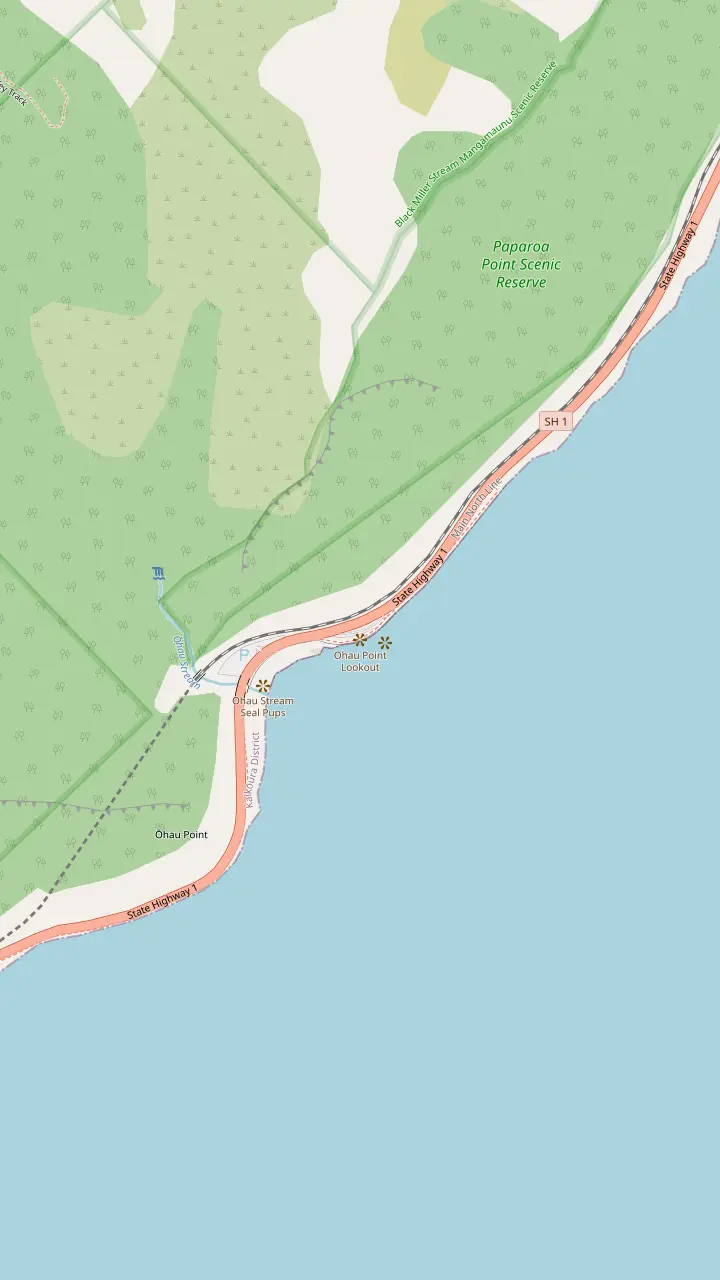
A major fur seal breeding colony; view it from the platform and roadside walkway, as the sanctuary itself is closed to the public.
Google Maps© OpenStreetMap contributors, map data
Sperm whale watching in Kaikoura works because a deep canyon runs almost to the beach. Meet the young males who feed there, learn their dive rhythm and know when to raise your camera.
Editorial team, kaikourawhalewatching.quest · Updated November 8, 2026 · Read in 9 min
Sperm whale watching in Kaikoura rests on a simple piece of geography. DOC explains that sperm whales prefer deep water and gather in areas with submarine canyons, and at Kaikoura, where such a canyon lies close in, they are present all year round.1 That is why you can find sperm whales year round off this town while most coasts only see them pass. DOC goes further: it appears that no other area in the world routinely has the species so close to the coast.7
The population here is also unusually well known. DOC describes it as the most studied sperm whale population in New Zealand, made up of both residents and transients, and mostly males.2 The operator keeps detailed records of every trip, including the identity of each whale it sees, where it was and anything unusual it did.8 Its skippers come to recognise individual animals, and some regular visitors appear to trust the boats while new arrivals prefer them to keep further off.9
For you, that steadiness changes the odds. On an average outing the crew finds 1-2 whales, and the company reports a success rate of over 90%, with 80% of the fare refunded if no whale is found.10,11 Destination Kaikoura's listing gives the success rate as 95%, so the published figures differ a little.12 Either way, the sperm whale is the one species you can plan around here, and everything else in these waters is a welcome extra.
Sperm whale facts
| Measure | Figure | Source |
|---|---|---|
| Typical dive | Around 35 minutes | DOC |
| Typical depth | Down to 400 m | DOC |
| Long dives | Over one hour, below 1000 m | DOC |
| Average dive | 40-60 minutes | Operator |
| Deepest recorded | Over 3000m | Operator |
| Food per day | Around 1.5 tonnes | Operator |
| Brain | Up to 9 kg | Operator |
Figures from DOC's sperm whale page and the boat operator's whale pages; the two sources describe different averages.5,26,27,25,28,29
Stand on the Kaikoura Peninsula and the deep sea is closer than it looks. The operator places the Kaikoura Canyon around 800 metres off the coast.3 It runs on for over 60 kilometres and falls to 1200+ metres.4 DOC describes it as the point where the offshore Hikurangi Trench comes unusually close to shore.16 Behind you, the Seaward Kaikoura Range climbs to 2600m, and the canyon drops past 1200m just offshore, a rare pairing of heights and depths.17
The same earth forces build both. The operator explains that the trench formed as the Hikurangi Plateau slides beneath the Indo-Australian Plate.18 On land, DOC notes that the Kaikoura mountains are rising faster than any others in New Zealand, at 10 mm per year, while erosion wears them down again.19 At sea, cold water moving along the floor of the trench rises as it nears the coast and carries deep-ocean nutrients up with it.20 That upwelling feeds everything from plankton to the whales.
Scientists have measured just how rich the canyon floor is. NIWA describes the Kaikoura Canyon as one of the most productive deep-sea seabed habitats yet described, with a biomass of large invertebrates 100 times higher than the highest found at depths below 500m in similar places.21 It is one of at least an estimated 660 submarine canyons worldwide, few of them studied in such detail.22 DOC adds that the canyon is an important feeding area for the seabirds, seals, dolphins and whales the town is known for.23
The whales you meet off Kaikoura are almost all males. The operator says the coast hosts male sperm whales only, with females and young whales living in warmer tropical waters.33 DOC's description fits: females mostly keep to seas over 1000 m deep and closer to the tropics than 40-50 degrees south, while males roam further into temperate seas.34 For a young male, the operator explains, Kaikoura is a feeding ground where he builds himself up for later life.35
These animals take decades to grow up. DOC notes that males do not reach physical maturity until about 50 years old.36 They eat large prey, mainly squid, and males are also likely to take sharks, rays and other bottom-living fish.37 The operator says a sperm whale can eat around 3% of its body weight each day, which for an adult male is about 1.5 tonnes of food.28 Many of the local whales carry round tentacle scars the size of dinner plates from their encounters with giant squid.38
Recognising one is easier than you might think. DOC describes a big, boxy head taking up about a third of the body, wrinkled skin and a dorsal fin worn down to a low hump.39,40 There is only one blowhole, set on the top left of the snout, which is why the blow leans forward and to the side.40 The operator adds that sperm whales have teeth only in the lower jaw.41 Even the operator's newest boat nods to the diet: its name, Wheketere, refers to fast squid.42
Make the most of it
Small choices on deck make the difference between a blur and the shot.
If I want to hear the whale
Ask about the hydrophone
Crews listen for clicks from up to 8 miles away.6
If I want the tail on camera
Stay on deck from the first blow
A dive of around 35 minutes can follow the flukes.5
If I get cold waiting
Watch the screens inside
World of the Whales shows the canyon below.30
If I want more than one whale
Book a full trip and be patient
The whales keep several miles apart from each other.31
If I care about the whales' welfare
Choose a permitted operator
Layers of protection
No fishing
Part of the canyon
Seismic limits
Coastal and offshore
Distance
Every boat, every day
A sperm whale spends most of its life deep below you. DOC says most dives last around 35 minutes and reach down to 400 m, though dives of over one hour and deeper than 1000 m are known.5,26 The operator gives its own averages of 40-60 minutes, and says breath holds of over 2 hours have been recorded.27 It also reports dives recorded at depths of over 3000m.25 On the boat, that rhythm decides everything: when a whale goes down, it may not come back before your trip ends.
When a whale surfaces, look for the blow first. DOC notes that the slanted, bushy blow gives a sperm whale away even when hardly anything else breaks the surface.14 The whale then lies at the surface like a dark log, breathing and resting between dives. Use that time to watch the head and the line of the back rather than staring through a phone screen. The animal is gathering air for its next long dive, and it will not hurry.
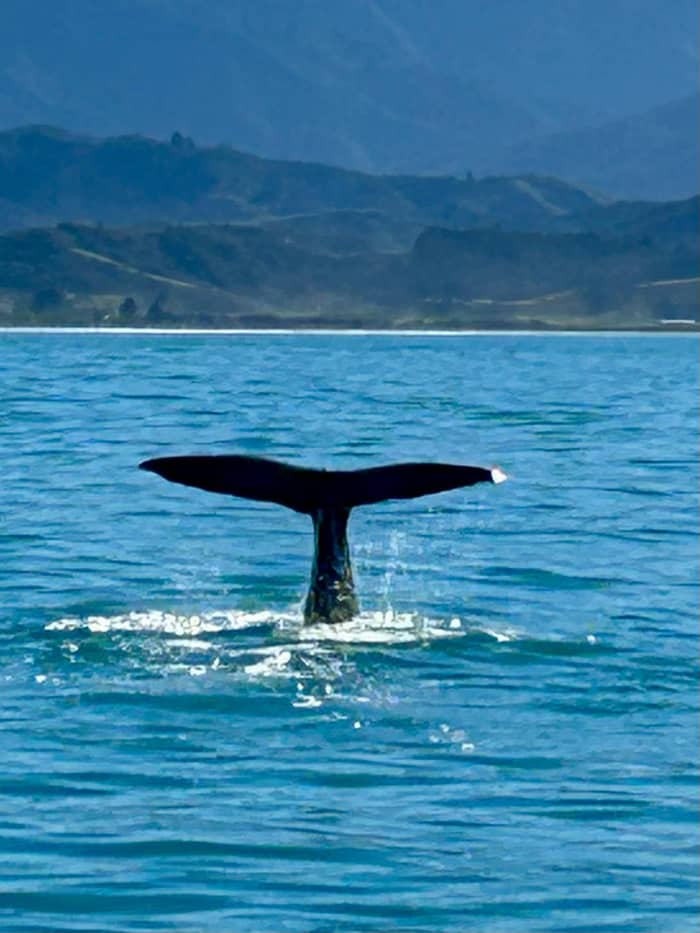
Then comes the moment everyone waits for. The back arches, the body rolls forward and the broad flukes rise out of the water before sliding down into the canyon. That is the sperm whale tail shot people hope to take home. Keep your camera ready the whole time the whale is up, set a fast shutter speed and frame wide, as the flukes lift higher than you expect. If you miss it, put the camera down and simply watch: the crew may find another whale later in the trip.
A sighting
Listening
Clicks carry from 1 to 8 miles.6
Moving
Louder clicks mean a closer whale.13
Silence
The crew scans the surface for a blow.
Surface
An angled, bushy blow gives it away.14
Resting
Boats keep at least 50 m away.15
Diving
Then a dive of around 35 minutes.5
Sperm whales are found by sound as much as by sight. The operator describes their clicks as one of the loudest noises in the animal kingdom, a rhythmic ticking that works as a sophisticated sonar system.60 DOC notes that the whales use clicks to locate and possibly stun their prey.37 Crews lower hydrophones, underwater microphones that can pick up a sperm whale's echolocation anywhere from 1 to 8 miles away.6 Ask the crew if you can listen: the sound is unforgettable.
The search follows the noise. The louder the click, the operator says, the closer the boat is to the whale.13 The sound is directional, so the crew can tell which way to steer.61 A faint click may mean a move of a mile or more and another listen. When the clicks fall silent, the crew starts scanning the surface closely. That quiet moment is a good cue to get onto the outside deck and pick a spot at the rail.
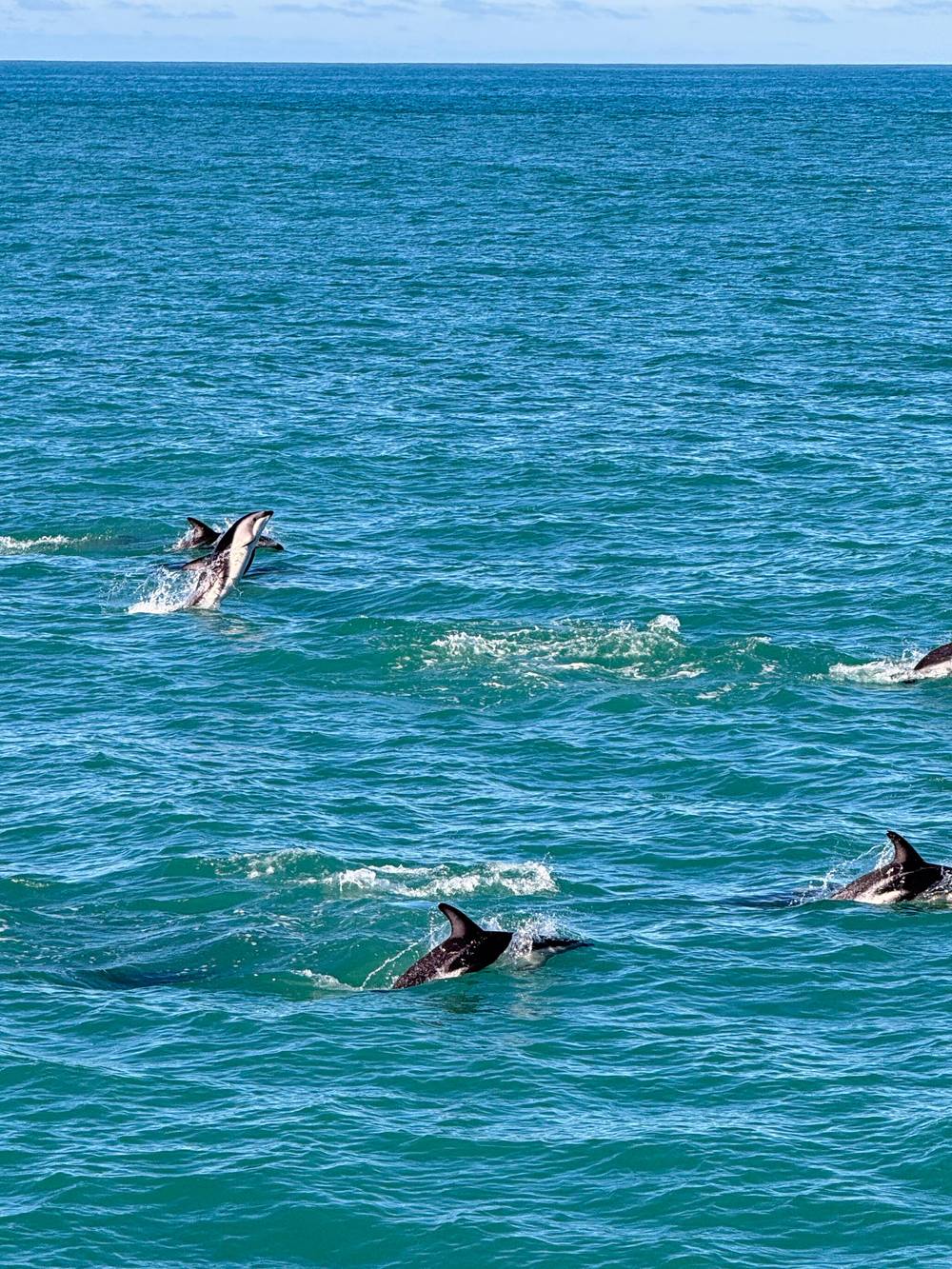
Patience is built into the trip. The whales form loose groups and keep several miles apart, which is why seeing more than 1 to 2 on one trip counts as a real bonus.31 While the crew listens, the onboard presentation World of the Whales takes passengers on a virtual trip to the bottom of the canyon.30 Once the whales have been seen, and if time allows, the captain may run in along the coast to look for dolphins and seals.62
Video
Nature Vault on YouTube · Tap play to load the video; not before.
It appears that there is no other area in the world where this species is routinely found so close to the coast (Dawson et al., 1996)
On deck
In November 2016 a 7.8 magnitude earthquake struck the region and triggered what scientists call a canyon flushing event in the Kaikoura Canyon.63 NIWA calculated that at least 850 million tonnes of sediment poured from the canyon head down its main channel and killed every organism living in the seabed.64 The flow carried on along the deep Hikurangi Channel, and its deposits were sampled up to 680km northeast of Kaikoura.65
The canyon itself changed shape. NIWA reports that the floor of its two main reaches deepened by up to 50m.66 Its scientists calculate that such events recur on average every 140 years, set off by large earthquakes.67 In the first survey after the quake, fish and whales were still seen in the area even though the seabed life had gone.68 DOC reports that the earthquake changed the foraging patterns of the sperm whales for at least 12 months.69
Recovery came faster than expected. NIWA found signs of recovery on the canyon floor 10 months after the landslides.70 Within four years the community there looked similar to the one before the disturbance.71 NIWA expects full recovery of the area within 12 years of the quake, and perhaps sooner.72 A whale observer from the boat company even joined one of the research voyages.73 Today the whales are back on their old feeding grounds.
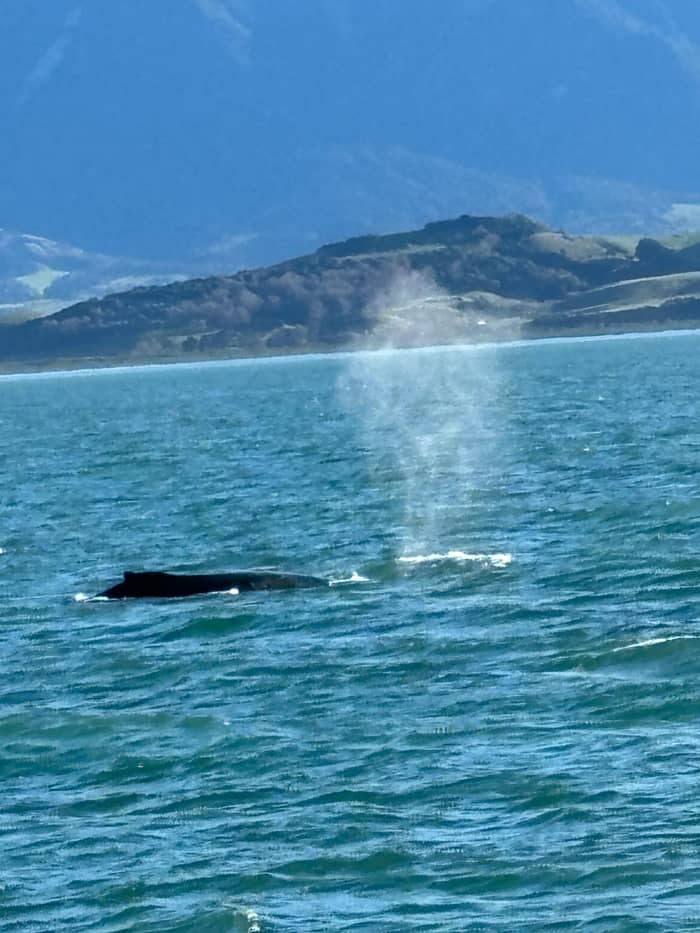
Every boat out here plays by the same rules. DOC asks skippers to come in on a whale from the side and a little behind, never closer than 50 m.15 No boat should approach if three or more are already within 300 m of the whale.74 Swimming with whales is not permitted.75 Around any baleen or sperm whale mother and calf, the distance rises to at least 200 m.76 Disturbing or harming a whale breaks the law, namely the Marine Mammals Protection Act 1978.77
The rules exist for a reason. DOC cites research showing that sperm whales react badly to rapid approaches, sudden changes in speed and close approaches by boats, and spend less time at the surface as a result.78 DOC manages and monitors the Kaikoura whale-watching operations to limit that effect.79 The operator points to research completed in 2011 that found the current regulations, including the three vessels within 300m rule, appear to manage interaction between tour boats and whales appropriately.80
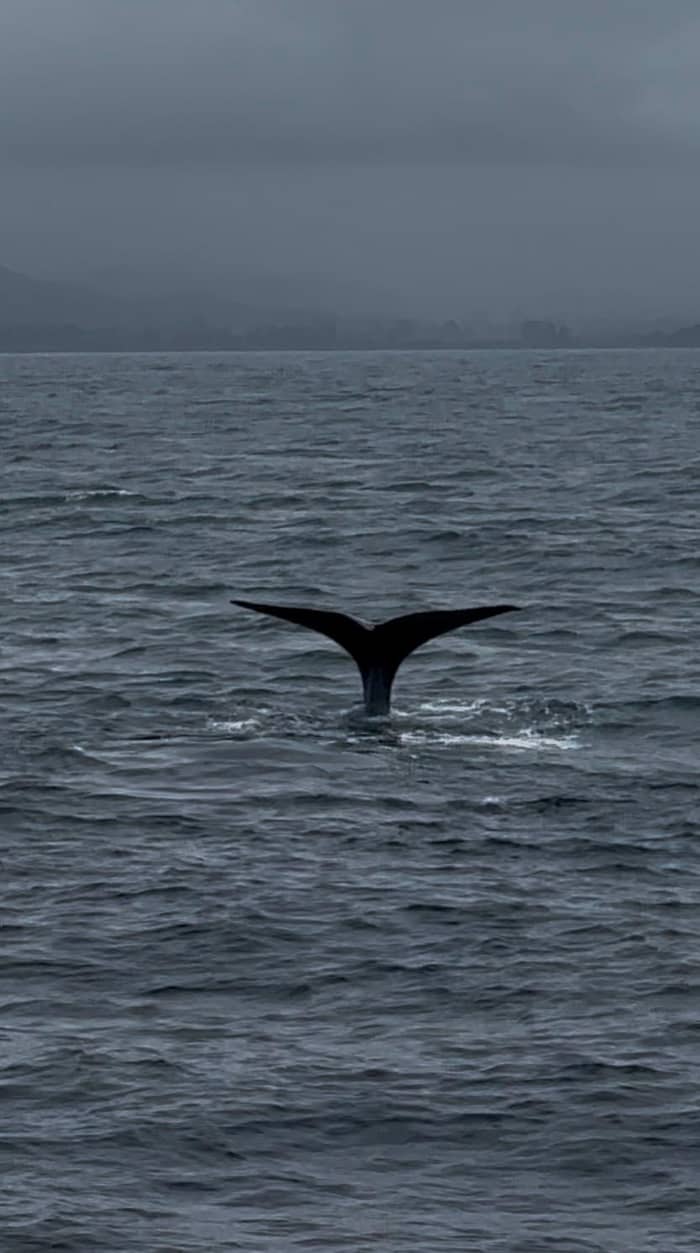
Protection also covers the water itself. Hikurangi Marine Reserve takes in part of the canyon, about 10,395 hectares and 1,000 meters deep, the biggest and deepest marine reserve off New Zealand's mainland, in DOC's words.24 The Te Rohe o Te Whānau Puha Whale Sanctuary covers approximately 4,700 square kilometres and restricts seismic surveys.81,82 The operator's boats use jet units that are quieter for marine mammals and have no exposed propeller.83
FAQ
DOC says they favour submarine canyons, and at Kaikoura they are present all year round.1
The operator says Kaikoura hosts male sperm whales only; females stay in warmer waters.33
The crew's hydrophones pick up the echolocation clicks at that range.6
DOC rules do not permit swimming with whales, whatever the boat.75
Sources
More to read
Wondering if the whales will show? A real person answers here.